
Can and should enlightened global businesses solve real global problems like war and poverty?

World headlines show the global community is faced with serious problems of conflict and instability: 10,000 or more deaths per year from the Mexican Drug War, Syrian Civil War, Iraqi Insurgency, and ethnic violence in South Sudan. 1,000-9,999 deaths per year in Gaza and from civil wars in Afghanistan, Somalia, Nigeria, Northwest Pakistan, Egypt, and […]
U.S. Technology Companies, Sovereign States, and the Battle Over Data Protection

Who owns an individual’s electronic communications data, who should have access to it, and what can be done with it? The battle of privacy versus security is currently raging between U.S. technology companies and national security forces. U.S. technology companies are adopting corporate foreign policies to respond to sovereign states’ efforts to access customer data, […]
Business and Cyber Peace – We Need You!

Rarely does a day seem to go by without another front page story about a firm being breached by cyber-attackers. Even experts in the field are far from immune from the unsustainable status quo. For example, Jim Lewis of the Center for Strategic and International Studies has said: ‘‘We have a faith-based approach [to cybersecurity], […]
Interviews with the 2015 Business for Peace Honorees
Ethical leadership can lead to many positive organizational outcomes. Previous studies have shown a correlation between ethical conduct and profitability; in addition, firms that have high ethical standards have fewer legal issues. The existing ethical leadership literature assumes a stable external environment. The business and peace literature, on the other hand, assumes instability but has […]
Improving Learning for Syrian and host community children and youth in the Middle East

How does a company make a meaningful impact in addressing a major societal challenge? How do we leverage our core expertise and capabilities, and do so in a sustainable way that doesn’t fade away as the media turns its attention to the next big crisis? Over the past couple of years we’ve given this a […]
Coca-Cola’s Contribution to Stability, Growth, and Optimism

In my article, I review the role of a global commercial organization, The Coca-Cola Company, in contributing to national stability in developing markets through a strategic approach to social and economic contribution. The company’s initiatives complement the role of policymakers, who are primarily responsible for the safety and prosperity of citizens, often using the Golden […]
Legitimate Business and Peace should be natural allies, so what is the best argument for bringing the private sector into peacebuilding efforts?

There is an irony to current thinking on the private sector and peacebuilding. The conflict in Syria and the massive international response to the refugee crisis has made private sector investment and jobs for refugees the flavour of the month. From the London Syria conference to the UN General Assembly in 2016, donors have lined […]
Building Peace is Everybody’s Business

War is bad for business. The private sector, including both local and international companies, is often among the first to be hit by armed conflict. Investment and trading opportunities disappear, infrastructure is damaged and, most tragically of all, employees are killed. All of this should provide motivation for businesses to contribute to peacebuilding. Some are […]
Why Business May Contribute to Peace

What is increasingly clear from our work at the SDG Fund (a UN development mechanism, multi-donor agency that brings together UN Agencies, governments, civil society and business to achieve the Sustainable Development Goals) the complexity of the SDGs converge a guiding set of principles of interest to all actors. Paloma Duran, Director of the SDG […]
Business, peace, and world politics: The role of third parties in conflict resolution

With the growing role of the private sector in global politics comes increasing challenges and opportunities, an example of which is conducting business in pre- and post-conflict environments. While the extant business literature discusses the work these actors can do to reduce tensions in conflict zones, the role of these actors is notably absent in […]
Why business leaders focus on issues of peace

While we know that business is key for stable peacebuilding, less is known about why business actually becomes involved in peace processes and peacebuilding. Based on a review of the academic literature and of case studies at the global level, in this article I address this question from three perspectives: First, business needs peace to […]
Tim Fort: Welcome to the Business and Peace Challenge!

In this video, Tim Fort, Eveleigh Professor of Business Ethics, Kelley School of Business, Indiana University, introduces the Business and Peace Challenge hosted by the Kelley School of Business and Business Fights Poverty. Over the course of October, the Challenge will include an online programme of written articles and online discussions. Content will be drawn […]
Collaboration in Support of Micro-Enterprises in Value Chains
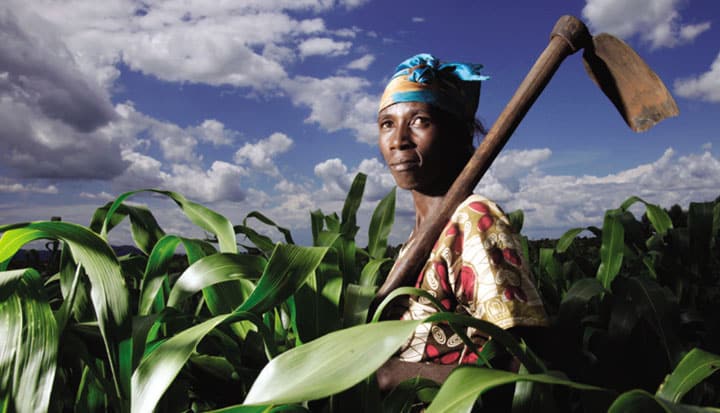
The “Growing Together” report – guidance to businesses to support them in helping micro-enterprises in their value chains to thrive, and why that is important for women’s economic empowerment. Our new report – “Growing Together”, developed with SABMiller, the Harvard Kennedy Corporate Responsibility Initiative and Business Fights Poverty, sets out why businesses should take a […]
One Year of Inclusive Business Models in Bangladesh

Six Inclusive Business (IB) models dedicated towards SRHR were launched on the 25th August, 2016. In the last one year, the project has relentlessly worked to establish a sustainable solution to the Sexual and Reproductive Health and Rights (SRHR) of 3.5 million female Ready Made Garments (RMG) workers. In the continuous effort to improve lives […]
One Million Women Missing From the US Tech Sector

Despite an estimated investment by the US technology industry of $0.8bn – $1.2bn in diversity efforts over the past five years, women’s representation at tech firms has actually decreased. In the last 15 years representation of women has fallen a percentage point, to represent just 28 percent of the tech workforce today. Given women are […]
Enhancing the Livelihoods of Women in Unilever’s Agricultural Supply Chain
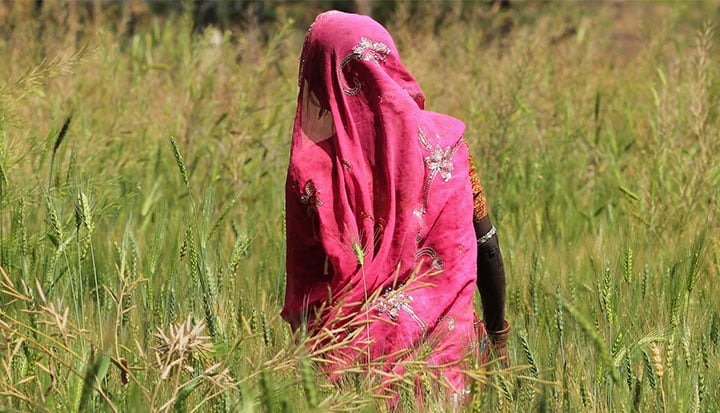
Unilever Case Study on Women’s Economic Empowerment Overview Empowering women is critical to eradicating poverty and accelerating global development. In Unilever’s case, this is hugely important for us. Over 70% of the people making the decision to buy our brands are women. Our future growth depends on meeting their needs and aspirations and on supporting […]
Mars Women Empowerment Plan

Background Women provide approximately 45% of the labor in cocoa supply chains, yet they face discrimination in access to resources compared to their male counterparts. They often work unpaid on family farms and are not always viewed as “farmers”. Low education, poor access to health services and limited training greatly disadvantage women (and their families) […]
Access to Finance and Women’s Economic Empowerment

Cherie Blair Foundation Case Study on Women’s Economic Empowerment In 2014 the Cherie Blair Foundation for Women partnered with Accenture and CARE International to promote the long-term financial independence of Rwandan women, by providing a combination of mentoring, training and improved access to financial services. Financial inclusion is a deeply gendered issue in Rwanda, where […]
Diageo Case Study: Building Diversity Internally

Diageo Case Study on Women’s Economic Empowerment Celebrating diversity and actively creating an inclusive, collaborative culture is core to Diageo’s purpose of celebrating life everyday everywhere. For our business to thrive, Diageo depends on having the right people with the skills and capabilities in each of the 180 countries in which they operate. Diageo is […]
Banking on Social Innovation
Caroline Anstey, Global Head of UBS and Society and former Managing Director of the World Bank, spoke to Adam Lent, Ashoka’s European Director of Research and Innovation, about a revolution in finance that currently is driving social change. Caroline believes firmly that the financial sector can drive social change by becoming more open as a […]