
Business and philanthropy: The blurring of boundaries

Recent years have witnessed a dramatic increase in the philanthropic resources made available for global development, particularly from private sector sources who encourage the increased application of business thinking and models to philanthropic objectives. This blurring of boundaries is leading to the creation of promising hybrid models that combine aspects of business investment approaches and […]
Non-Financial Performance Metrics For Corporate Responsibility Reporting Revisited

This is the first “Working Paper” from the Doughty Centre. It has been written by Dr Malcolm Arnold from Cranfield. Malcolm has not had any previous engagement with the Corporate Responsibility field. He completed his doctorate at Cranfield in summer 2007, on the impact of mergers and acquisitions on corporate value. Malcolm kindly volunteered to […]
Partnering to Strengthen Public Governance

Jan 08 – The report offers CEOs and Boards of Directors guidance on the development of an effective engagement strategy on relevant public governance challenges.
Small is Sustainable (And Beautiful!) – Encouraging European Smaller Enterprises To Be Sustainable

This paper takes stock of the some of the significant progress made and lessons learned in supporting the uptake of corporate social responsibility (CSR) amongst small and medium-sized enterprises (SMEs). It then identifies a number of issues that we think merit further attention as this important work continues. Our key messages are: In some countries, […]
The Business of Business is…? Unpicking the Corporate Responsibility Debate

Companies must be part of any lasting solution to many of the pressing environmental and social problems facing the world. All companies do good things and bad things, often at the same time. The essence of the debate over Corporate Responsibility1 (CR) is whether governance of the good and bad things companies do should be […]
Small is Sustainable (and Beautiful) Encouraging European Smaller Enterprises To Be Sustainable

This paper takes stock of the some of the significant progress made and lessons learned in supporting the uptake of corporate social responsibility (CSR) amongst small and medium-sized enterprises (SMEs). It then identifies a number of issues that we think merit further attention as this important work continues. Our key messages are: • In some […]
Business and Youth in the Arab World

May 07 – This sourcebook profiles 18 examples of business and partnership initiatives addressing youth development within the Arab world.
Business as a Partner in Overcoming Malnutrition

A Recipe for Success: how food companies can profit from consumer health

Feb 07 – This report makes recommendations as to how companies should address consumer health and obesity issues.
Regional employee engagement approaches to meet regional challenges: Africa (ENGAGE edition 2007)

Feb 07 – This edition aims to demonstrate how employee community engagement can be used as an effective tool for meeting corporate, NGO and international government goals.
CSR and beyond: Business and the development cycle

The impacts of globalization have produced strategic shifts in the landscapes facing both business and civil society. Both have come to play an increasing role in development and continue to adjust to changing roles and responsibilities. Yet corporate social responsibility initiatives are often limited in impact and many NGOs continue to be suspicious of business […]
Business as a Partner in Strengthening Public Health Systems in Developing Countries
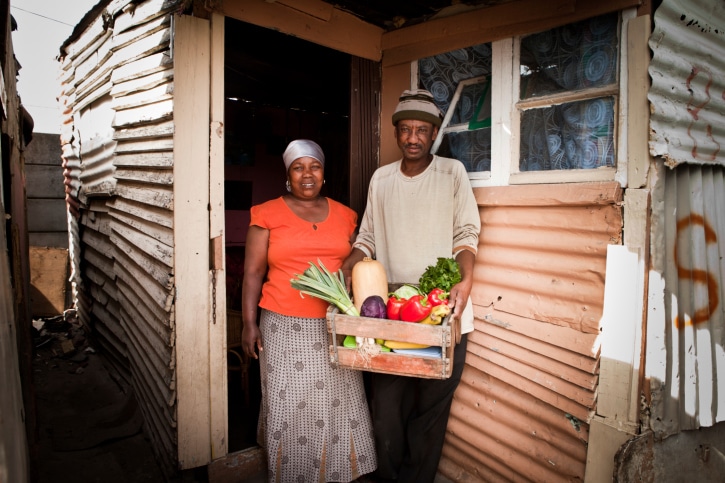
Sep 06 – This publication is part of a series and makes recommendations for ways that companies can get directly engaged in specific initiatives on-the-ground.
Development, Peace and Human Rights in Colombia

Jul 06 – The report draws together the latest thinking from overseas combined with examples of pioneering efforts in Colombia, to show how companies can work in partnership with other stakeholders to create conditions for lasting prosperity.
The public–private alliance model for development

Building partnerships takes time and requires dedicated people and resources. But ultimately there is no better way to tackle development problems. The World Bank now has a superb opportunity to use its convening power to explore with other development actors the potential for scaling up the alliance approach within a strategic framework.
Business action to fight micronutrient deficiency
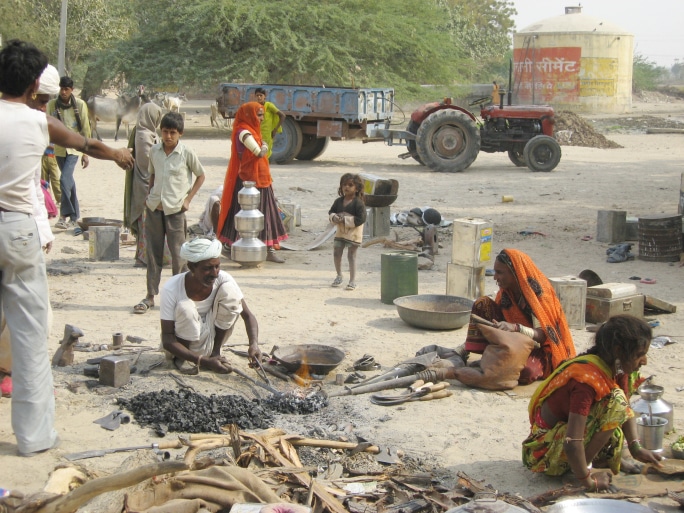
Cybermonks and rural entrepreneurs in Sri Lanka
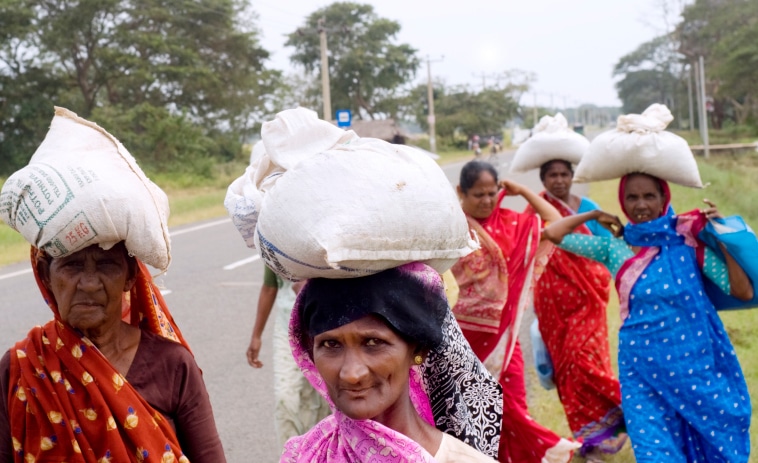
Business and the Millennium Development Goals

The private sector is now a vital partner in creating economic and social development. Business cannot operate in a cocoon from the problems that impact society as a whole. While sharing the burden of those problems, the private sector can be a large part of delivering solutions. Progress towards development targets, exemplified in the United […]
Private sector roles in the partnership age

The nature and scale of development issues require effective partnerships and solutions that involve different sectors of society. These interconnected and systemic issues are best looked at in a multisectoral setting requiring illaborative solutions, with a deliberate experimentational feature—learning from tinkering—which represents a challenge to the traditional motivational, organizational, and accountability mechanism long established for […]
Best Intentions, Complex Realities

Mar 06 – Drawing on lessons from the 2004 Tsunami, this report examines how business resources can contribute to disaster recovery.
The Business of Health – The health of business

Mar 06 – The examples gathered in this publication illustrate the business case for corporate action on health.